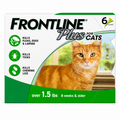


Flea and tick treatments are the most commonly misused thing in a pet cupboard. Not because people are careless — because the boxes look alike, the doses look alike, and the important detail is printed small.
Before you open anything, check these three lines.
1. Species. This is the one that hurts.
Never put a dog treatment on a cat. Many dog spot-ons contain permethrin, which dogs tolerate and cats do not. Cats cannot process it, and a dog-sized dose can cause tremors and seizures. It is an emergency, not a wait-and-see.
This includes second-hand contact. If you treat a dog and a cat sleeps pressed against them that night, the cat can pick up enough to react. Keep them apart until the application site is completely dry — usually a day.
If it happens: wash the cat with plain dish soap and lukewarm water, and ring your vet or an animal poison line straight away.
2. Weight range. Not "about right".
Spot-ons are sold in weight bands for a reason. Under-dosing is the usual mistake, and it does not simply work less well — it exposes the flea population to a weak dose, which is how resistance builds on your own floor.
- Weigh the animal. Do not estimate from the last vet visit.
- A puppy or kitten crossing into a new band mid-treatment needs the new band next time, not now.
- Two small tubes do not equal one large one. Buy the correct band.
3. Age and weight minimums
Most treatments have a floor — commonly eight weeks and a minimum body weight. A kitten under it needs a different approach entirely, usually flea-combing and a vet conversation, not a smaller squeeze of an adult product.
Applying it so it actually works
- Part the fur and apply to skin, at the base of the skull where they cannot lick it.
- Dry coat. Do not bathe for 48 hours either side.
- Split a large dose across two spots along the spine if the tube is a big one.
- Treat every pet in the house, on the same day. Fleas do not respect that one cat stays indoors.
Why the fleas came back three weeks later
They probably never left. Only about five percent of an infestation is on the animal; the rest is eggs and larvae in carpet, bedding and the sofa. Treating the pet alone is half the job.
Wash bedding hot, vacuum thoroughly including under furniture, and empty the vacuum outside. Then keep treating monthly for at least three months so you outlast the life cycle.
When to ring the vet instead of buying something
If your pet is pregnant, nursing, very young, elderly, unwell or already on medication, ask first. Same if there is broken or irritated skin at the application site, or if you have used a product and seen a reaction.
Nothing here is veterinary advice. It is the label, read carefully — and the label always wins.